
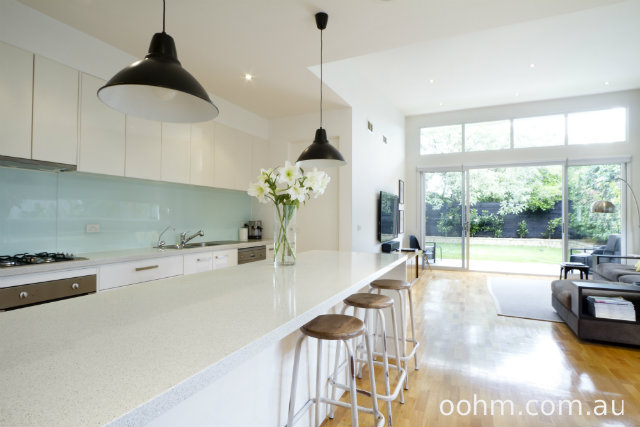
I love designing the details of a kitchen. When it comes to deciding on the benchtop however you are faced with so many options to choose from it can be difficult to know which one is right for you.
The first way to narrow down your choice is to think about how much you can afford to spend. How many metres of benchtop do you have and how much per square metre are you willing to spend? If you have a large area you may not be able to afford the more expensive options.
There are many different materials that benchtops are available in. So how do you know what best fits your purpose and what should you be looking out for? Any of these types of benchtops will normally perform well, but there are three main aspects that will usually help you to narrow down your choices. These are:
- Cost
- Style
- Level of maintenance required
Each one has different properties, durability and maintenance. Lets take a look at the pro’s and con’s of each. Often you can mix the finishes so that your island bench has the better quality and the above cupboard one has a less expensive option.


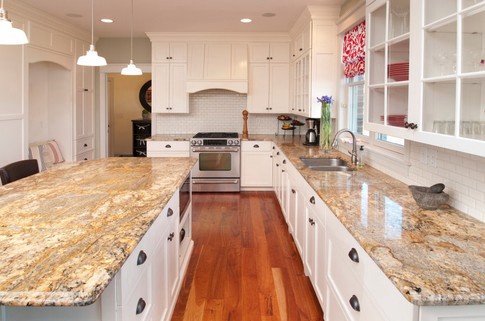
Granite
PRO’S – Granite is one of the hardest materials available to use as a kitchen benchtop. It provides a unique durability and character to any kitchen surface. It withstands staining and scratching better than most other kitchen surfaces.
CON’S – It is the most expensive benchtop of all. There are a limited range of colours, mostly the darker hues.
Marble
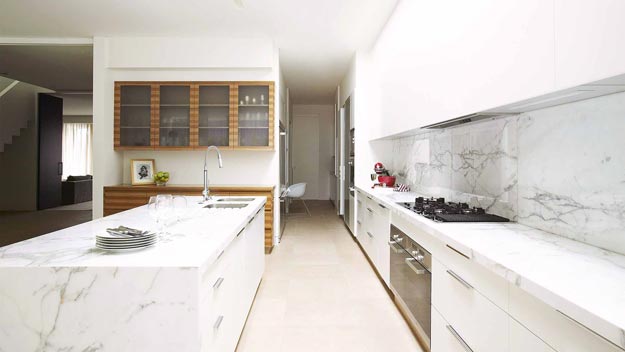
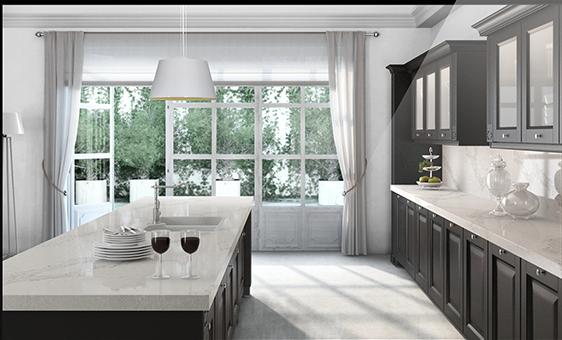
PRO’S – Marbles are popular for their colour variations and rich veining giving unique patterning. Stones natural qualities give a luxurious and soft look so it is a stunning addition to any kitchen.
CON’S – Being a porous stone, marble needs to be sealed to prevent staining. If you choose a quality sealer it will last 5 years. Marble doesn’t like extremely hot or cold surfaces as it expands and contracts.
Timber
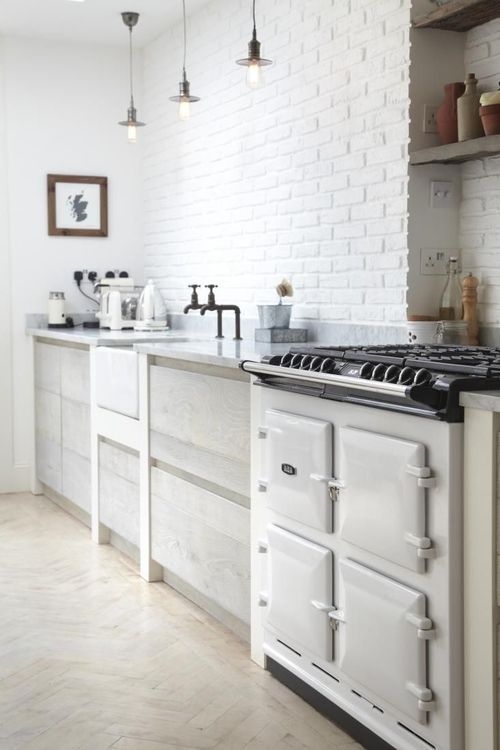
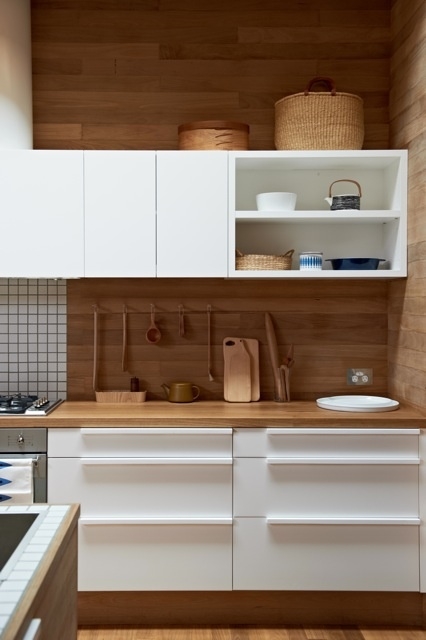
PRO’S – Every timber has its own character and lines. Timber adds warmth to a kitchen and compliments other finishes like marble, stone or stainless steel.
CON’S – Can be costly depending on the variety of timber. It is not scratch resistant, can bruise easily and needs to be sealed and regularly maintained.

Metal
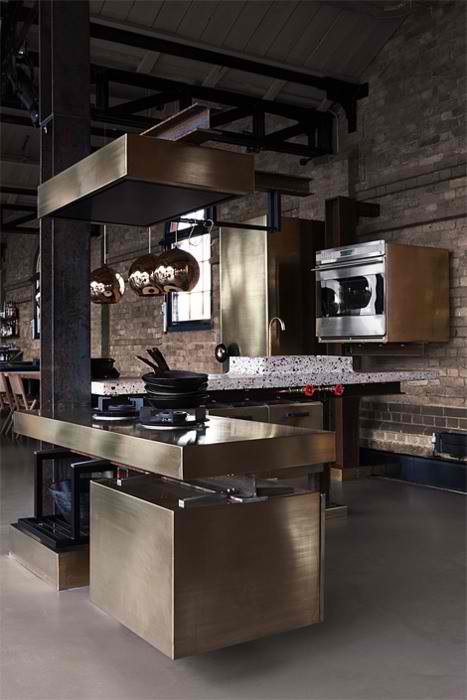
PRO’S – Known for its commercial use, stainless steel has also become increasing popular in our home kitchen as a bench top surface. They are hard wearing and virtually indispensible. They are east to clean too.
CON’S – Steel bench tops do scratch easily. They are highly reflective and not good for kitchens with direct sunlight. Can look clinical if not complimented well with cabinetry and fixtures.
Copper has also made its way into our kitchens giving a gorgeous warm lustre. Like stainless steel it is easy to clean and looks beautiful, but is expensive.

Engineered Stone
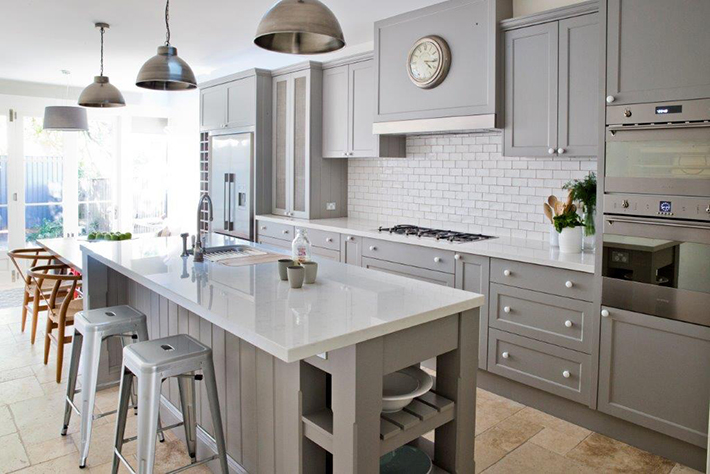
Engineered stone provides a very attractive, hard, durable surface very much like natural stone. There are numerous varieties of engineered stones ( made with quartz and marble in a resin or polyester they are less costly than real stone. With a look of marble or granite they are easy to maintain and are available in a large colour range.
CON’S – Dark colours tend to lack lustre. It may chip around the edges, and looks best if it is resealed every few years.
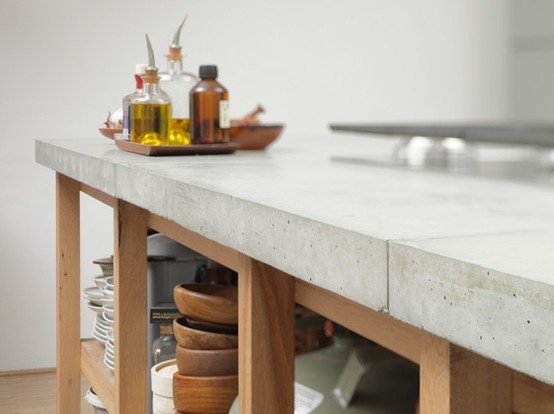
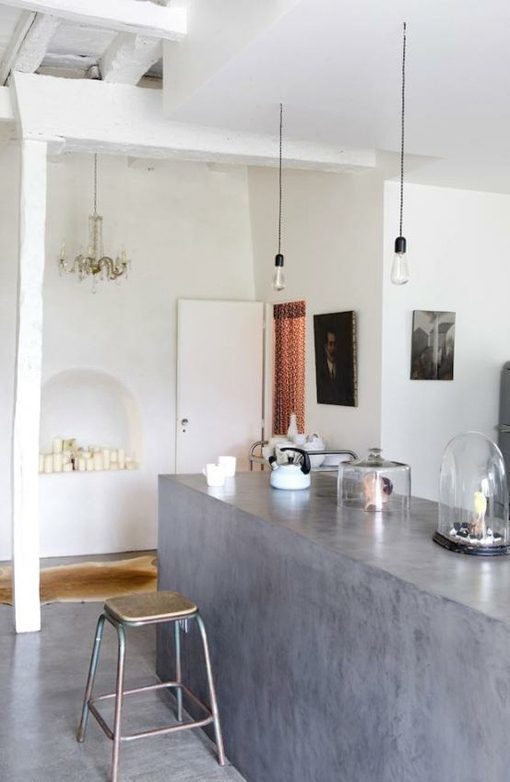
Concrete
PRO’S – Great for an industrial look kitchen, polished homes for floors as well as bench tops.
CON’S – Concrete is very porous so stains easily. It also chips and can develop small cracks.
Laminate
PRO’S – Laminates bench tops normally consist of a layer of plastic laminate ( cellulose reinforced plastic ) that is glued to a block of engineered wood like particleboard or medium density fibre board (MDF). There is a great choice of colour and patterns with over 100’s of options available. It is cost effective, though it does not have the luxurious look of the natural surfaces.
CON’S – Does not value add to your home like the more expensive finishes do. Great for investment properties or lower priced homes. Laminate is not so heat resistant and can melt if something too hot is placed directly on the surface.
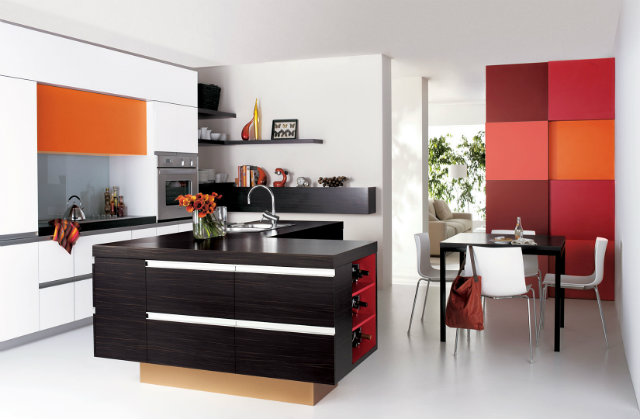
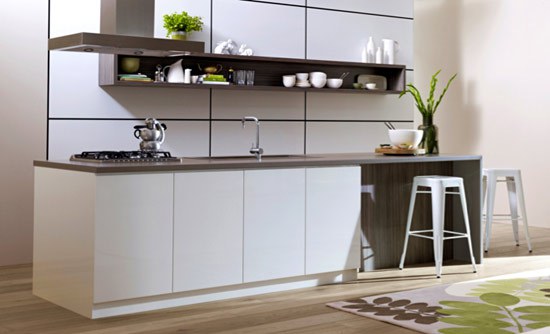
Acrylic
PRO’S – Acrylic ( Corian ) bench tops are made either of a basic acrylic polymer, or a composite of an acrylic polymer and a blend of natural minerals (depending on the particular product). Originally designed for commercial use, acrylic bench tops are made from a plastic that is poured into moulds to create sheets of a uniform thickness. These sheets can them be custom shaped using heat in a process called thermoforming thus can incorporate a moulded sink. They are usually polished to look like the stone.
CON’S – They can scratch and stain easily, however these can be polished out. Often the lighter colours do turn darker as time passes. They are expensive but long lasting.

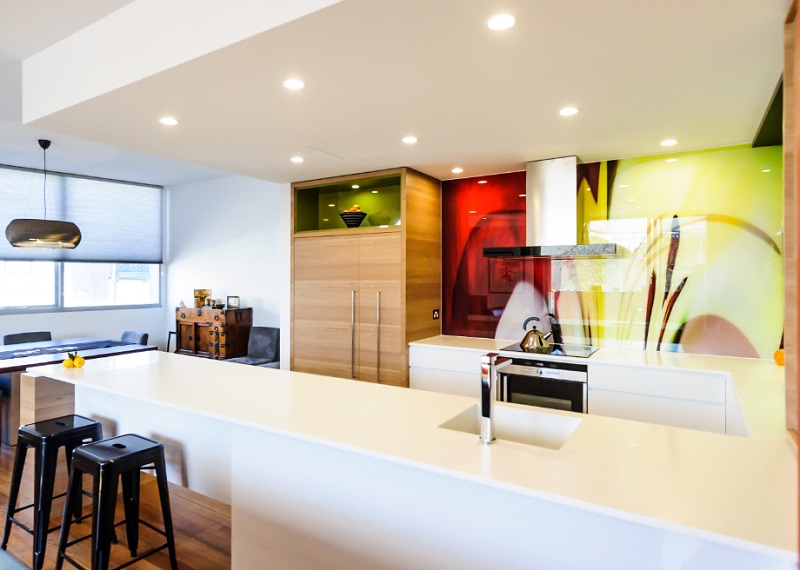
Well now that you have all the pro’s and con’s the choice will come down to what you really love in the price range that you can afford.
Olga Morozova
October 1, 2015 at 1:27 am (10 years ago)I love that photo with the white marble counters! I am considering marble myself but am concerned about how it will do with hot things placed on it. I’m in a habit of setting cookie pans on my countertops, but I’d be willing to retrain myself if I need to. How sensitive are they to heat?
Vincent Burns
February 5, 2016 at 10:13 am (10 years ago)I like the color and style of the benchtop in the picture. I think it would be nice to have something like this. I am actually thinking of laminate for now because it is cheap and durable. Hopefully, I can use that for now.
Andy Harrison
April 9, 2016 at 4:57 am (10 years ago)Of the types you listed here, I think that I’m going to go with granite. Yes I do know that it is one of the more expensive ones, but I’d rather pay the little bit more to get the look I want. Plus, you can get different designs with the granite to make it unique.
Kyle O'Ren
June 6, 2016 at 10:52 pm (10 years ago)I don’t think I could ever stray away from my granite counter tops. It seems to be well worth the cost. I might try some stainless steel if I have a moving trolley though. Thanks for the info.
Hazel Owens
June 7, 2016 at 12:45 am (10 years ago)I think that stainless steel can work great as a bench top if it’s done right. Like you said, you have to make sure it won’t be too reflective, and you’ll want to use decorations or cabinetry to make it look more welcoming. However, stainless steel can look super sleek and are super easy to clean, which I definitely appreciate as a mother of young kids. Thanks for the article!
Polished concrete bench tops Brisbane
August 19, 2016 at 12:01 pm (10 years ago)I love the bench tops with polished concrete, its easy to clean your kitchen.
Kitchen benchtops auckland
August 22, 2016 at 9:12 pm (10 years ago)The first way to narrow down your choice is to think about how much you can afford to spend. How many meters of bench top do you have and how much per square meter are you willing to spend? If you have a large area you may not be able to afford the more expensive options.
Madeleine
December 8, 2016 at 8:55 pm (9 years ago)Kitchen is the most essential part of home and we want it to be perfect. I admire your thoughts and I am glad, you shared this with us.
Madeleine recently posted…Test Post
Aaron C.
May 4, 2017 at 2:38 am (9 years ago)Choosing the right benchtops for your kitchen is essential. Not only does it need to match, but it also needs to withstand wear and tear. Thanks for including hypo-allergenic surfaces.